
Development resources · Project planning
Development site readiness
What needs to be true before you spend money on a site? Use this checklist to pull together the evidence, identify the people you need and prepare your next project meeting.
Could this warehouse become a neighborhood market?
Follow a market organizer from the first conversation with the owner to a decision about the budget. Select a graphic to open it at full size.
Read the text version
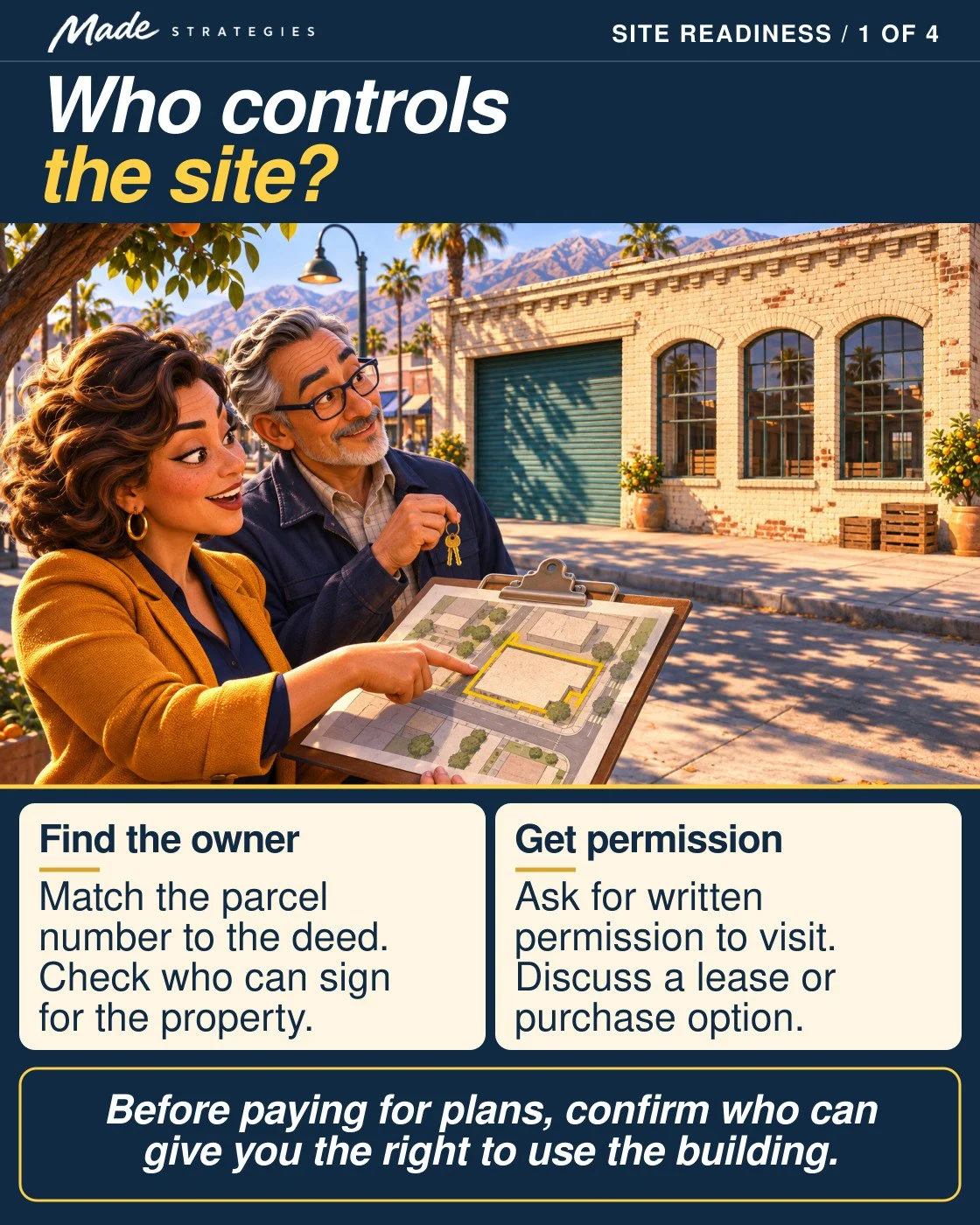
Who controls the site?
Match the parcel number to the deed and check who can sign for the property. Ask the owner for written permission to visit. Before paying for plans, discuss a lease or purchase option.
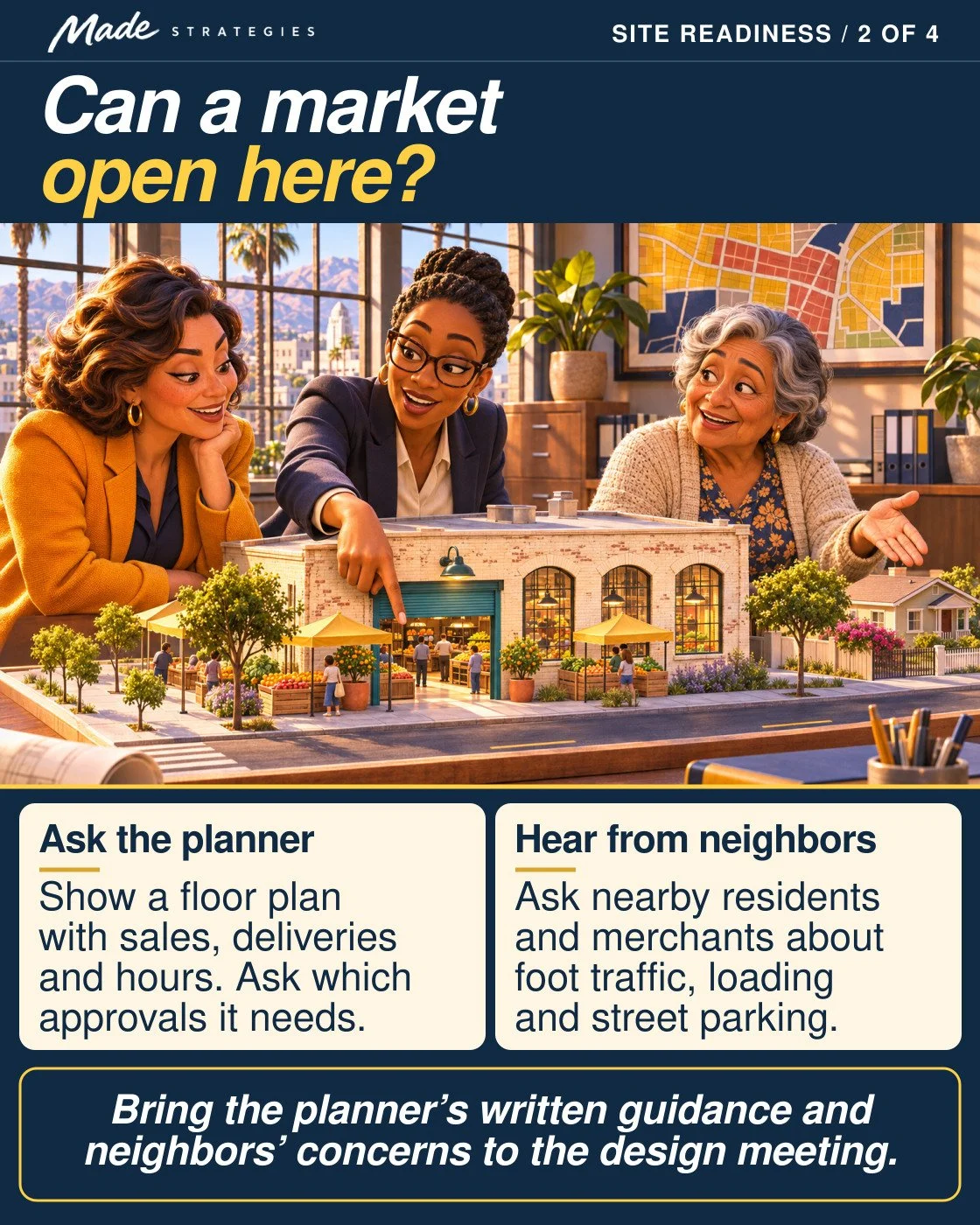
Can a market open here?
Show the planner how the building would be used, including sales, deliveries and hours. Ask which approvals it needs. Ask nearby residents and merchants about foot traffic, loading and parking. Bring both sets of findings to the design meeting.
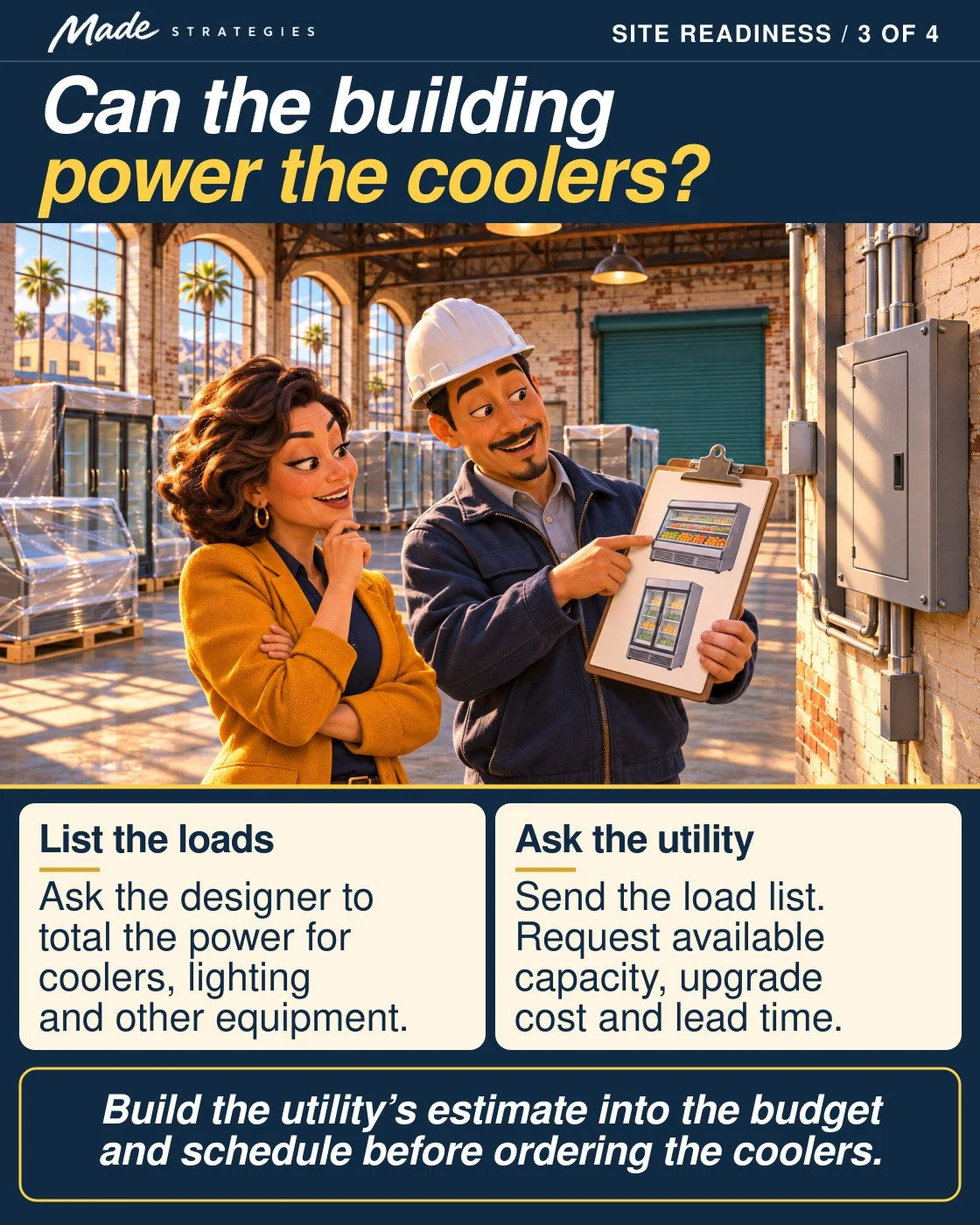
Can the building power the coolers?
Ask the designer to total the power needed for refrigeration, lighting and other equipment. Send the load list to the utility and request its available capacity, upgrade cost and lead time. Budget for that work before ordering the coolers.
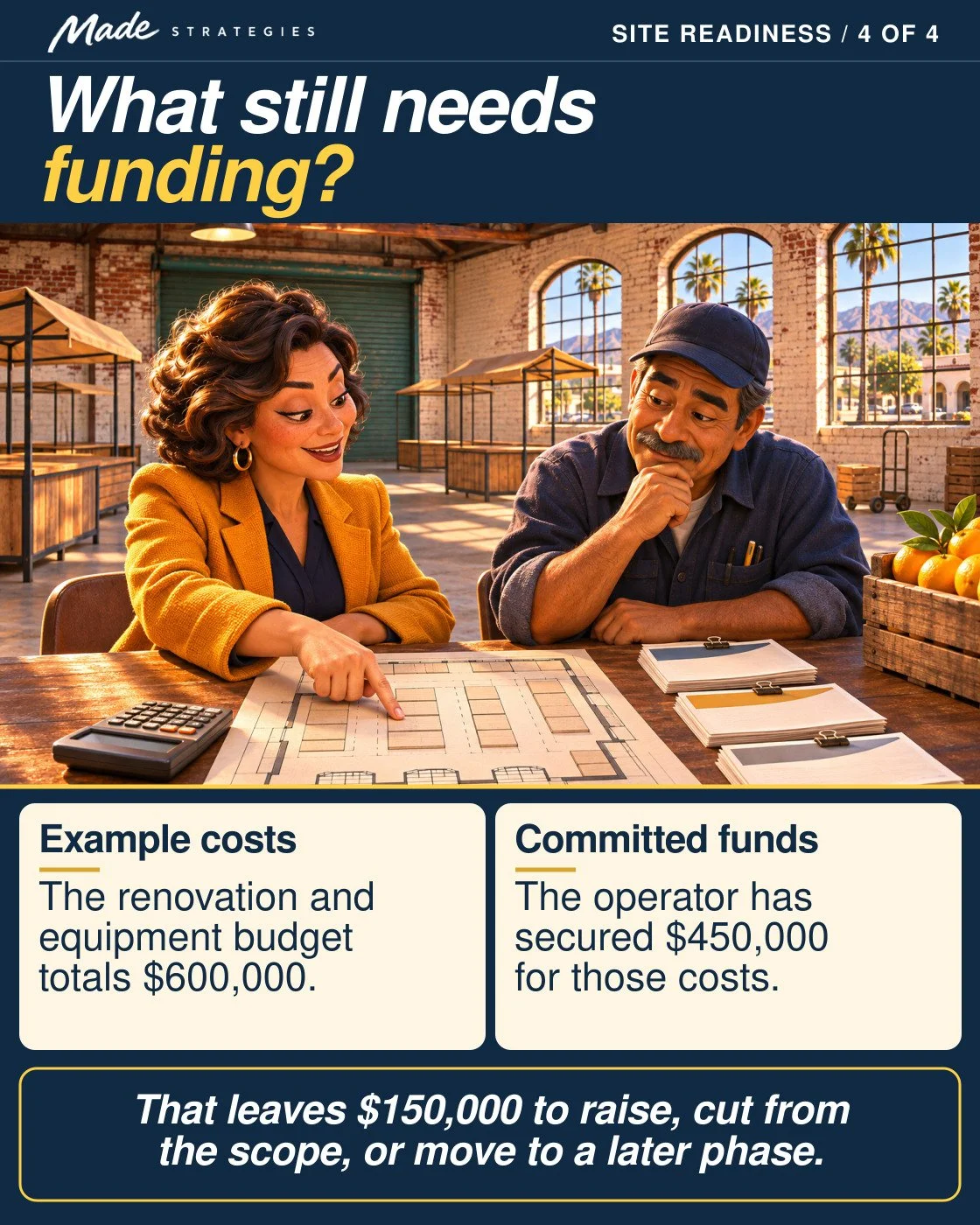
What still needs funding?
In this example, renovations and equipment cost $600,000. The operator has secured $450,000. That leaves $150,000 to raise, cut from the scope, or move to a later phase.
Build your site brief
Choose the project type and mark what your team can document today. A dated record from an owner, agency, utility or project partner is more useful than an assumption. Your selections stay on this page.
Ask who the homes should serve, at what rents or prices, and who can manage them. Bring a unit mix, a local demand indicator and a plan for hearing from current residents.
Owner, parcel boundary, and permission to pursue the proposed use.
Current zoning, proposed use and the local approval path.
Street access, water, sewer and available electric capacity.
Known site hazards, prior uses, building condition and survey needs.
Evidence of demand from tenants, residents, employers or service users.
Acquisition, design, construction and operating costs, with funding gaps.
Affected residents and businesses, desired benefits and displacement concerns.
Accountable sponsor, partner roles, next decision and target date.
Your meeting brief
What to bring to the first meeting
A parcel and a use
Bring the address or parcel number, a map showing access, and two sentences describing what would happen on the site and who would use it.
The people affected
Include the property owner or operator, the agency that can clarify requirements, and people who live, work or run a business near the site.
A decision to make
Choose one decision for the meeting. For example, commission a utility capacity estimate, compare a second location or pause until an operator is identified.
Screen an affordable housing site
Before choosing a public contribution, compare local housing need, confirm the proposed number of restricted homes, and ask the sponsor to separate committed sources from applications still under review. Bring the cost per restricted home and the remaining gap to the next city or county meeting.
Compare sites with Made Strategies
Bring one site or a shortlist. We can scope a side-by-side site comparison, an agency coordination meeting or a decision memo for your board. The checklist organizes due diligence. The responsible agencies confirm approvals and service capacity.