
Project ideas for local economies
Explore ways to put local research to work, from protecting farmland and recruiting retailers to connecting students with growers.

Give your board the farm economy on one page.
Show which crops led the harvest, what changed from last year, and where the figures came from. Pair a county brief with the next decision on your board’s agenda.
Build a California county briefExplain the farm economy
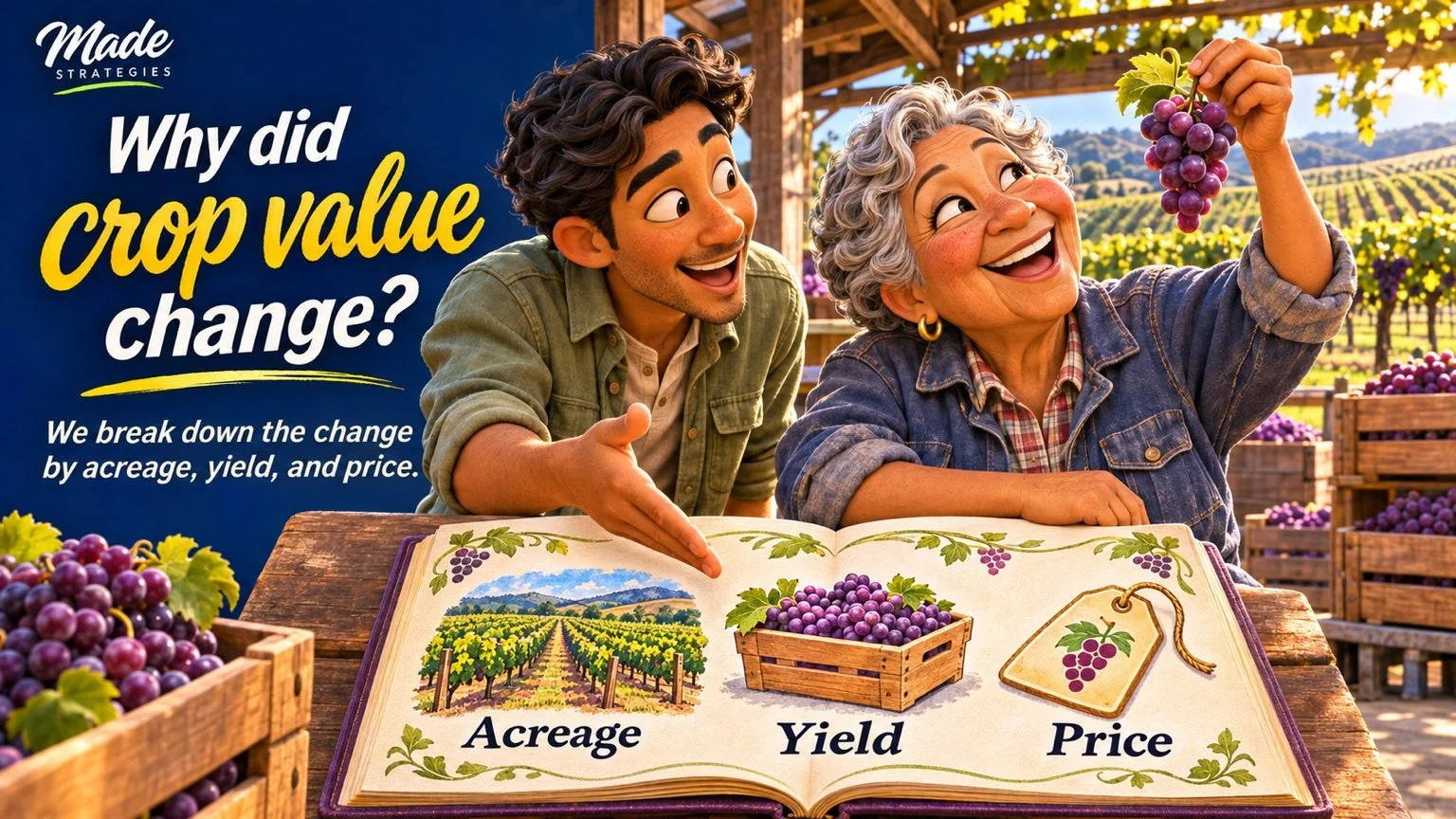
Crop value analysis
Separate changes in harvested acreage, yield per acre, and price where the crop reports support that breakdown. Use the findings in your annual briefing.

Interactive crop maps
Show where crops grow and compare acreage across years with suitable local records. The acreage on the illustrated map is an example.

Farm supplier mapping
Identify the repair shops, equipment dealers, and suppliers that growers depend on. Use a local supplier map to guide business outreach.
Test a market opportunity

Farmers market spending
Use a short shopper survey to estimate reported spending at the market and nearby businesses. Share the findings with downtown merchants.
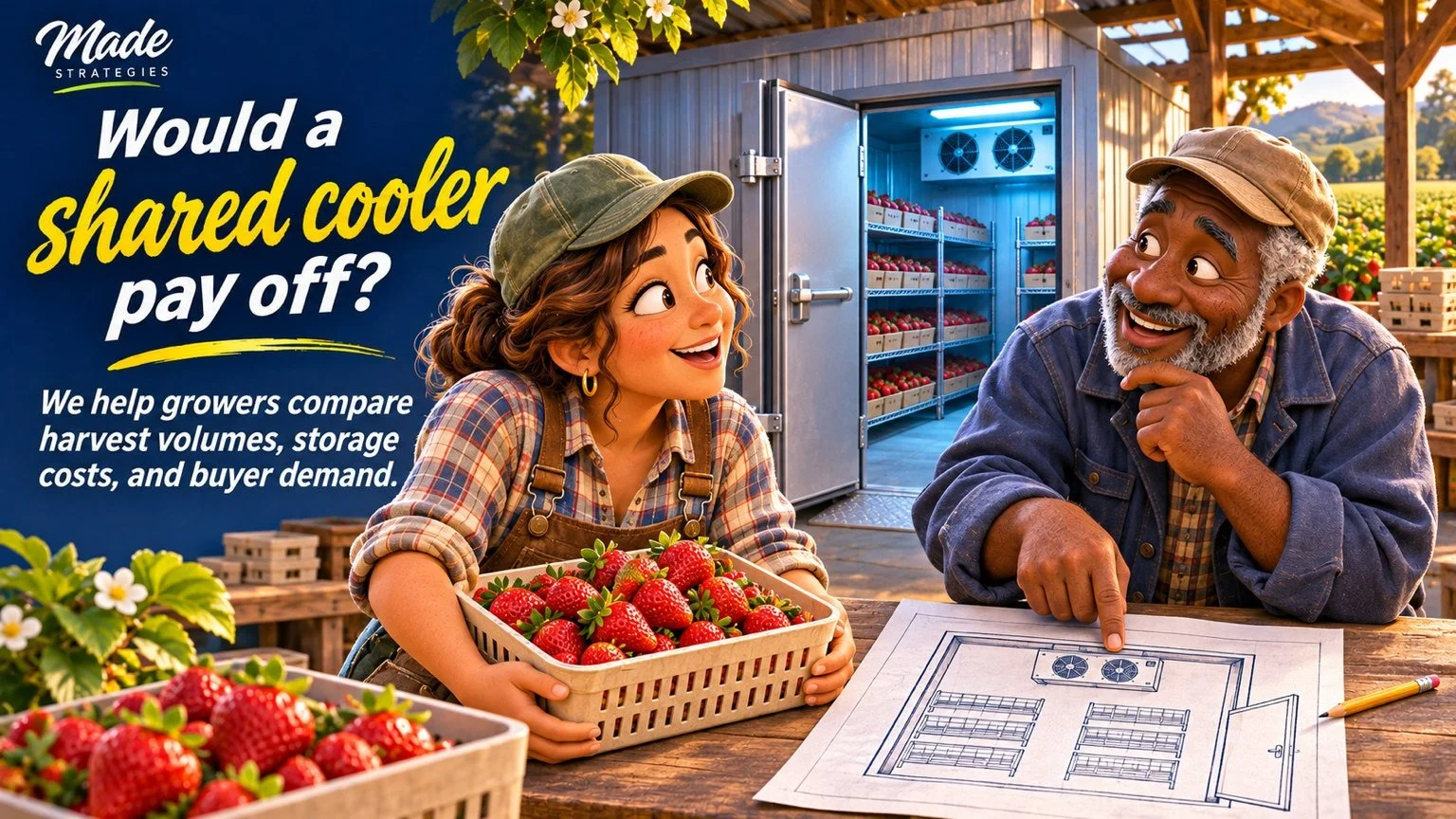
Shared cold-storage feasibility
Compare harvest volumes, buyer demand, and operating costs before growers commit to a shared cooler.

Local grower directory
Give chefs and food buyers a searchable list of participating farms, products, seasonal availability, and ordering contacts.
Involve your community

Bilingual grower listening sessions
Gather priorities in English and Spanish. Give agency staff a summary of what growers raised and which issues need follow-up.
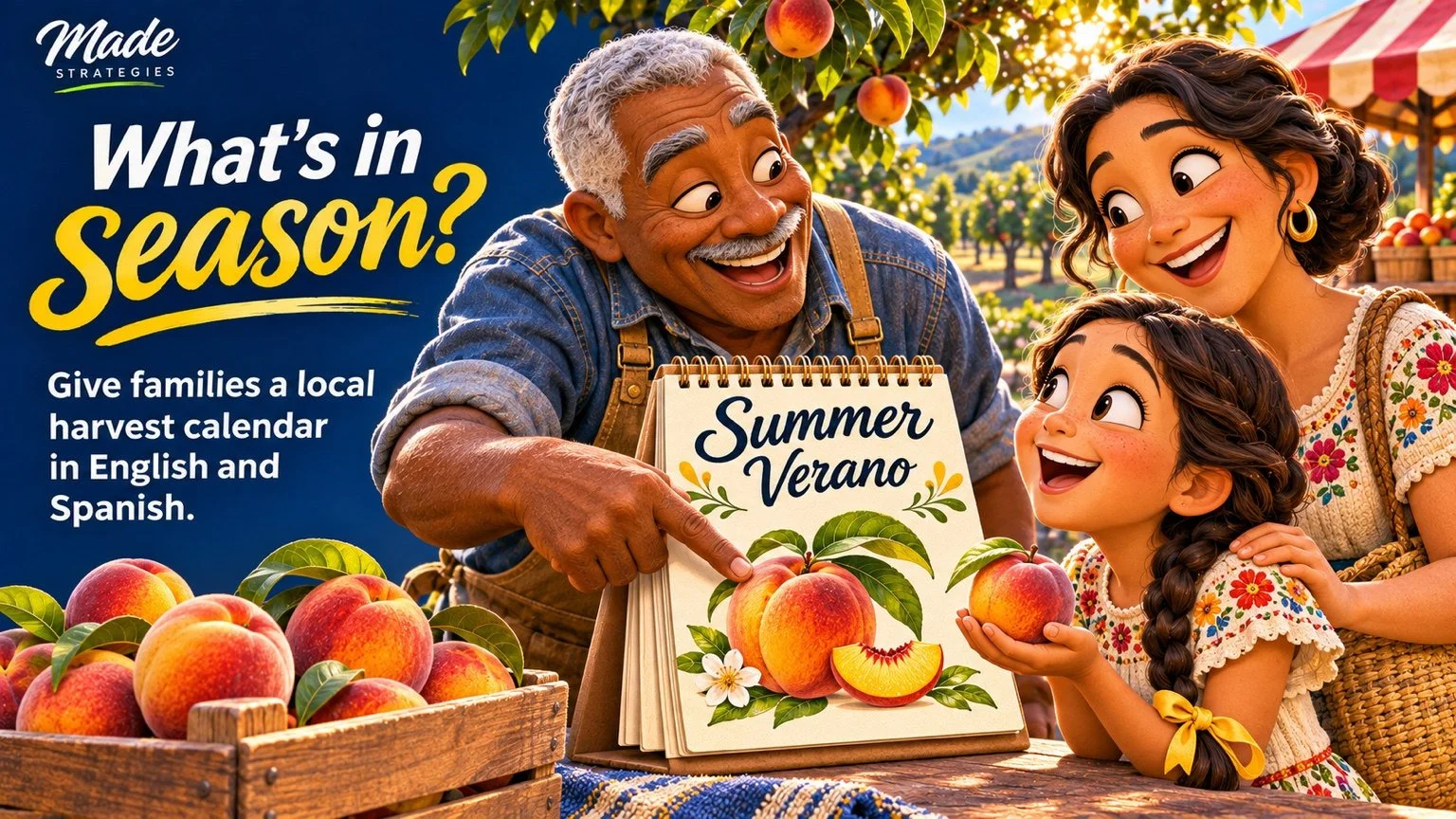
Bilingual harvest calendar
Give families and schools a seasonal guide to local crops in English and Spanish, with harvest windows checked by participating growers.
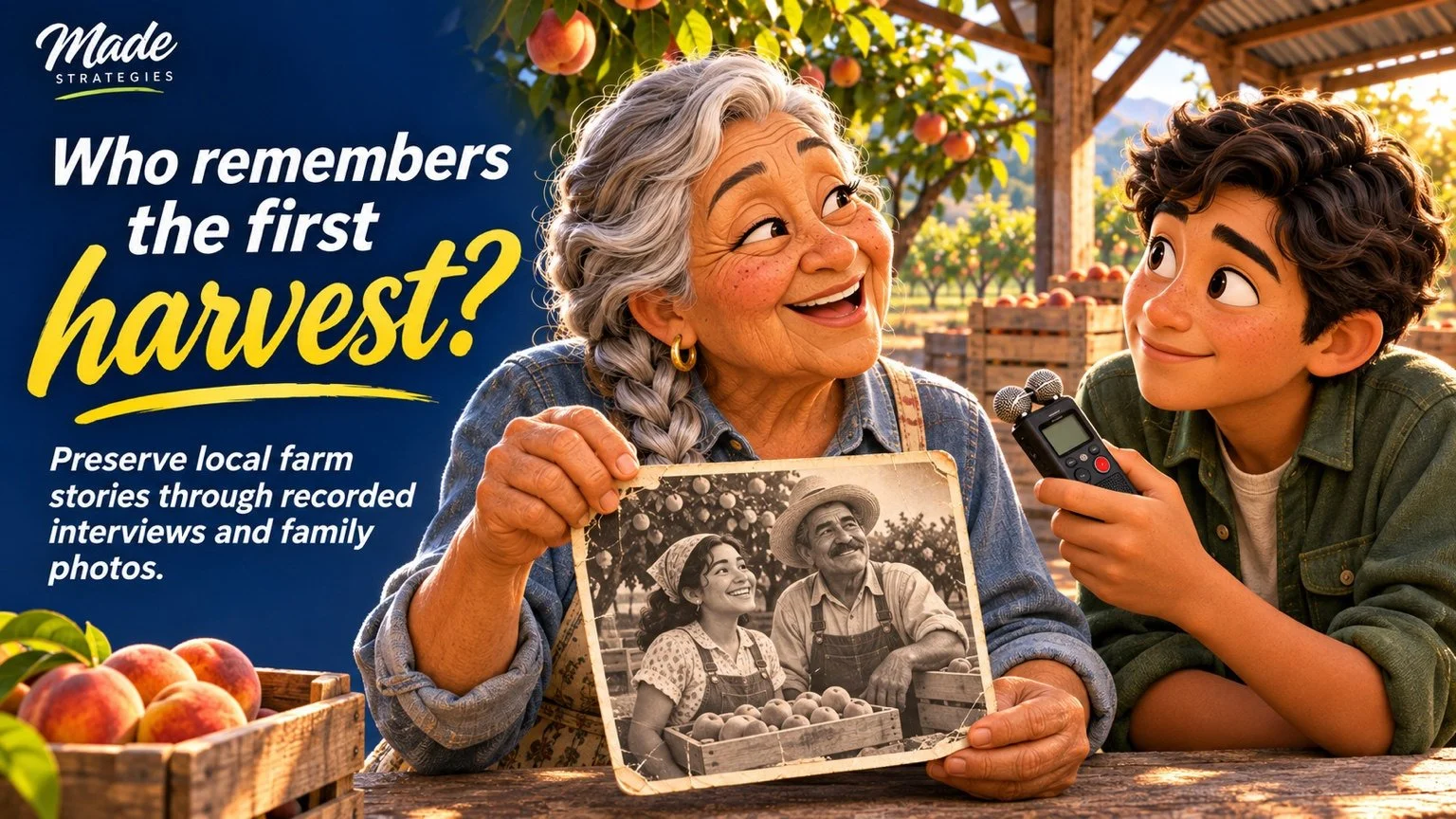
Farm oral histories
With participants’ permission, pair recorded interviews with family photos to create an archive for schools, libraries, and local exhibits.

Farmland protection
Map working farms and identify where development pressure, irrigation access, and community priorities make land protection most urgent.
Local markets and business development

Retail recruitment
Identify what residents travel elsewhere to buy, then use those spending gaps to build a shortlist of retailers for local sites.
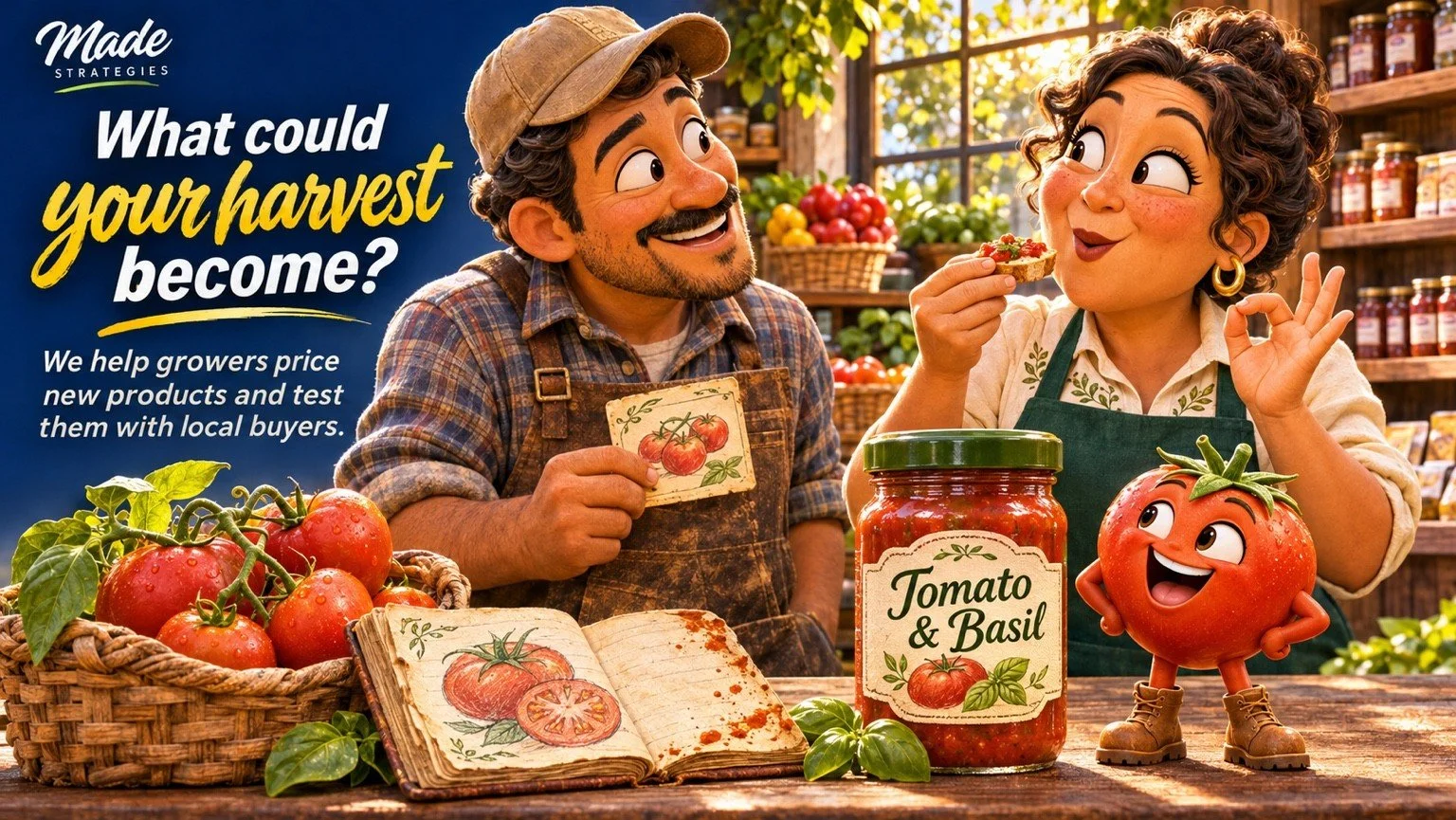
New markets for farm products
Work with growers to price a value-added product and test it with local buyers before expanding production.
Food access and agritourism
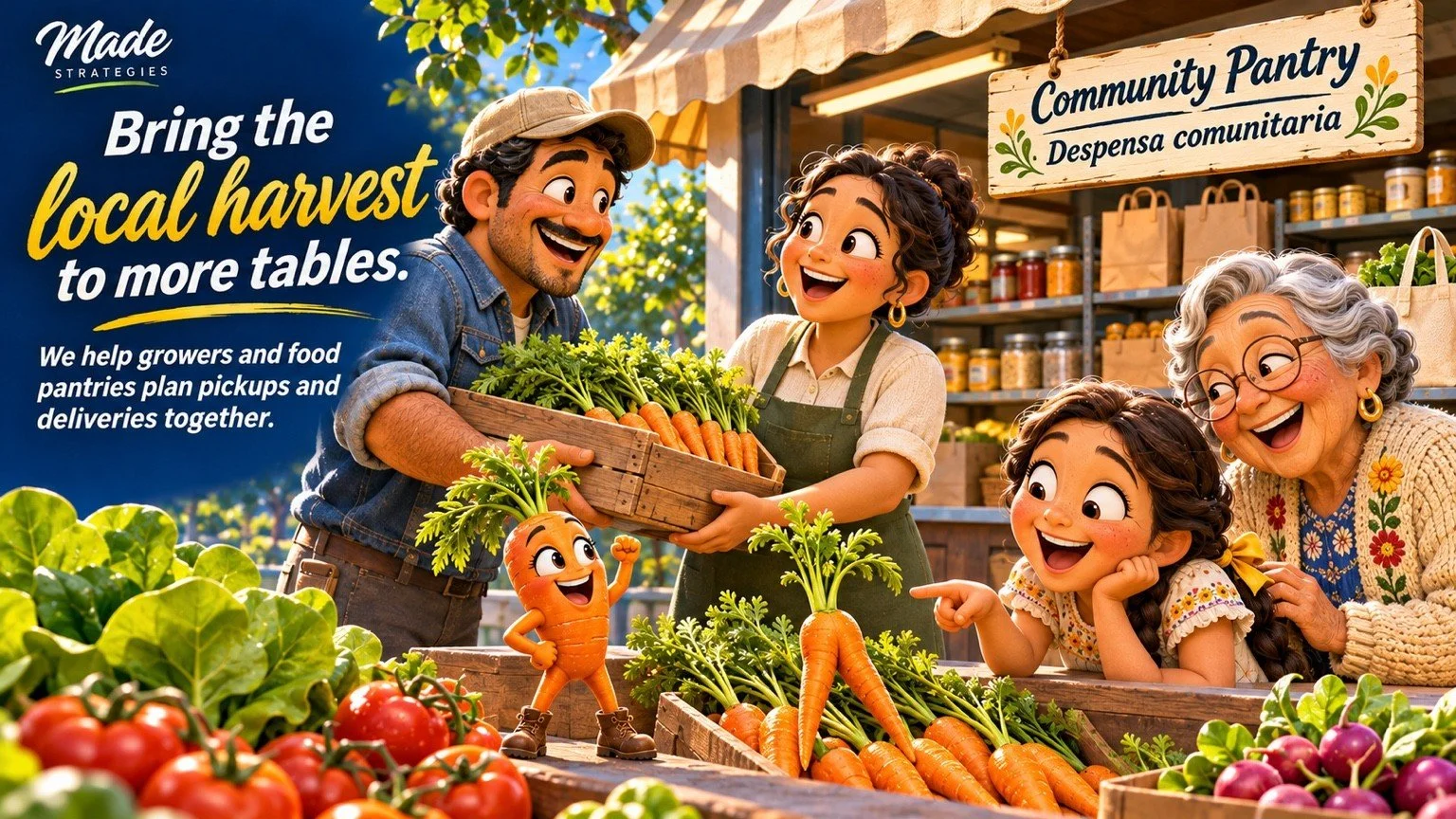
Grower and pantry partnerships
Match harvest windows with pantry pickup times and delivery capacity so more local produce reaches families.

Farm trails and visitor guides
Connect farm stands, markets, and growers with a trail map or passport that gives visitors a reason to explore the region.
Workforce and project funding

Agricultural career days
Bring schools and growers together for field demonstrations where students can try the technology used in local agriculture.

Funding and partnerships
Identify suitable grants, estimate project costs, and clarify partner roles. A farmworker housing concept is one example.
What would you like to work on?
Tell us about your community, your partners, and the decision ahead.